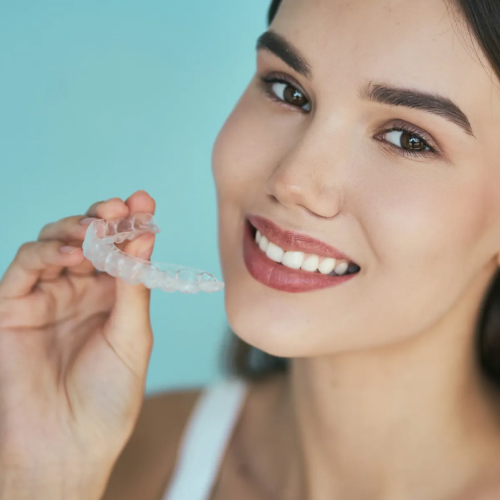
Invisalign vs. At-Home Aligners: What Cypress Patients Should Know Before Choosing
Comparing Invisalign vs. at-home aligners? Discover which clear aligner is best for your smile. Contact Nu Dentistry Cypress to schedule your consultation!
Read More
Reviewed by Dr. Ali Tameemi, DDS
At-home clear aligners and Invisalign both promise straighter teeth, but the biology of how they move teeth is fundamentally different — and so are the long-term health consequences. Before deciding, Cypress patients deserve a clear picture of what supervised treatment actually protects.
The marketing around at-home aligners is persuasive. Mail your impressions, receive trays, wear them daily. Simple. But that simplicity hides a serious mechanical limitation that most patients never hear about.
Invisalign treatment, performed under professional supervision, uses SmartForce attachments — small composite "buttons" bonded directly to specific teeth. These attachments act as anchor points that allow the aligner to exert precise, three-dimensional force on the root of a tooth, not just its crown. This is called bodily translation: the entire tooth — crown and root together — moves through the jaw in a controlled, predictable arc.
At-home aligner companies cannot bond attachments to your teeth. There's no clinician present to do it. Without attachments, the trays can only "tip" the crowns in a direction, leaving the roots lagging behind or pushed laterally. Research published in PMC confirms that even supervised Invisalign sees reduced predictability for rotation, intrusion, and extrusion — movements that depend heavily on attachment design and biomechanical control.
There's a second procedure at-home aligners cannot perform: interproximal reduction (IPR). IPR involves a dentist carefully removing microscopic amounts of enamel between teeth to create the space needed for safe tooth movement. Without IPR, teeth that need room to travel simply don't have it — and the aligner forces them anyway, potentially pushing roots outside the alveolar bone. That bone loss can be permanent.
WebMD notes that unsupervised orthodontic treatment may lead to compromised periodontal health and gum disease and TMJ disorders. The difference isn't cosmetic — it's structural. Invisalign's supervised model exists precisely because moving teeth safely requires clinical judgment at every stage.
Most conversations about Invisalign focus on the upfront treatment period. What gets far less attention is what happens the day treatment ends — and every year after that.
Once your final aligner comes out, your teeth will begin shifting back toward their original positions almost immediately. This is biological reality, not a flaw in treatment. Retainers are not optional; they are permanent maintenance for the results you worked months to achieve.
Invisalign's proprietary Vivera retainers are made from the same SmartTrack material as the aligners themselves. They're durable, well-fitting, and effective. They also wear out. Most patients need replacement sets every one to three years, depending on wear habits, grinding, and how often they're actually worn.
Think about what that means over time. A patient who completes Invisalign at age 30 and maintains their results through age 50 will need multiple replacement retainer sets over those two decades. Over a 20-year window, the cumulative retainer investment can rival — and in some cases exceed — the original treatment.
Patients do have alternatives. In-house lab retainers (Hawley or clear vacuum-formed) are available through general dentists and tend to carry a lower per-set replacement. Bonded permanent retainers — thin wires cemented behind the front teeth — eliminate the compliance variable entirely, though they require periodic professional checks and can accumulate plaque if not cleaned carefully.
The honest takeaway: ask your provider not just about the treatment timeline, but about the full retention plan. A patient satisfaction study on PubMed found that clear communication from the doctor about what treatment would involve was one of the strongest predictors of long-term patient satisfaction. Retention is part of treatment. Regular cleaning and exam appointments throughout your treatment and retention period are essential to keeping your results on track.
Here's a risk that almost never appears in standard Invisalign guides, but it affects a significant portion of adult aligner patients.
When you wear aligner trays, they create a sealed plastic chamber over your enamel. Saliva — your mouth's natural acid buffer — cannot reach the tooth surface underneath. Under normal circumstances, this is manageable. But introduce a substance between the tray and the tooth, and the chemistry changes dramatically.
Nicotine pouches like Zyn, vaping aerosols, sparkling water, and acidic beverages all change the pH environment inside that chamber. Without saliva to neutralize and wash away the acid, the enamel sits in prolonged contact with a concentrated, low-pH microenvironment. This accelerates demineralization far faster than the same substance would in an open mouth. Left unaddressed, this kind of enamel damage can lead to cavity fillings or more extensive restorative work down the line.
The risk compounds because the aligner material itself is affected. According to Healthline, Invisalign's SmartTrack material is a flexible thermoplastic — and like all thermoplastics, it can degrade when exposed to certain chemicals. Vaping aerosols and acidic beverages can warp or weaken the tray over time, altering the fit and compromising the tooth movement it was designed to produce.
The protocol is straightforward but non-negotiable: remove trays before any substance other than plain water enters your mouth. After removing them, rinse your mouth before reinserting. If you use nicotine pouches, treat them the same as eating — trays come out, and you wait until your mouth has been rinsed before they go back in. This isn't excessive caution; it's protecting both your enamel and the mechanical precision of your treatment.
Effectiveness data for Invisalign is encouraging for the right candidates. A comparative study published in PMC found that clear aligners produced dental alignment improvements comparable to conventional braces in mild to moderate malocclusion cases, with strong patient satisfaction outcomes. A separate long-term analysis found average treatment times with Invisalign shorter than dental braces in appropriately selected patients.
That word — "selected" — matters. Invisalign performs best for mild to moderate crowding, spacing, and certain bite corrections. Complex cases involving significant root movement, severe skeletal discrepancies, or large extraction spaces may still be better served by fixed appliances or a hybrid approach combining both.
Candidacy also depends on compliance. Aligners must be worn 20 to 22 hours per day to work as planned. Patients who struggle with consistency will see extended treatment times, additional refinement rounds, and potentially incomplete results. This isn't a judgment — it's a clinical reality worth weighing honestly before committing.
What Invisalign offers that at-home alternatives simply cannot: professional monitoring at every stage, the ability to course-correct when teeth aren't tracking as planned, access to attachments and IPR, and a dentist who is accountable for your outcome. Healthline's overview of invisible braces reinforces that supervised, in-office treatment remains the gold standard for patients seeking reliable, lasting results.
The question isn't whether Invisalign works. For the right patient who wears their trays consistently and follows their retention plan, it does. The question is whether you have the full picture — the biological mechanics, the lifetime maintenance, the lifestyle adjustments — before you start.
If you're weighing Invisalign against at-home options, the most important first step is an in-person evaluation with a dentist who can assess your actual tooth and root positions — not just the surface. At Nu Dentistry Cypress, our Cypress team provides comprehensive consultations so you understand exactly what your smile needs and what each option can realistically deliver. We also offer a full range of aesthetic dentistry services to complement your smile transformation. Schedule your consultation today.
Medical disclaimer: This article is for informational purposes only and does not constitute dental or medical advice. Individual treatment needs vary. Please consult a licensed dental professional for a diagnosis and personalized treatment recommendations.
Fresh news from the dental world
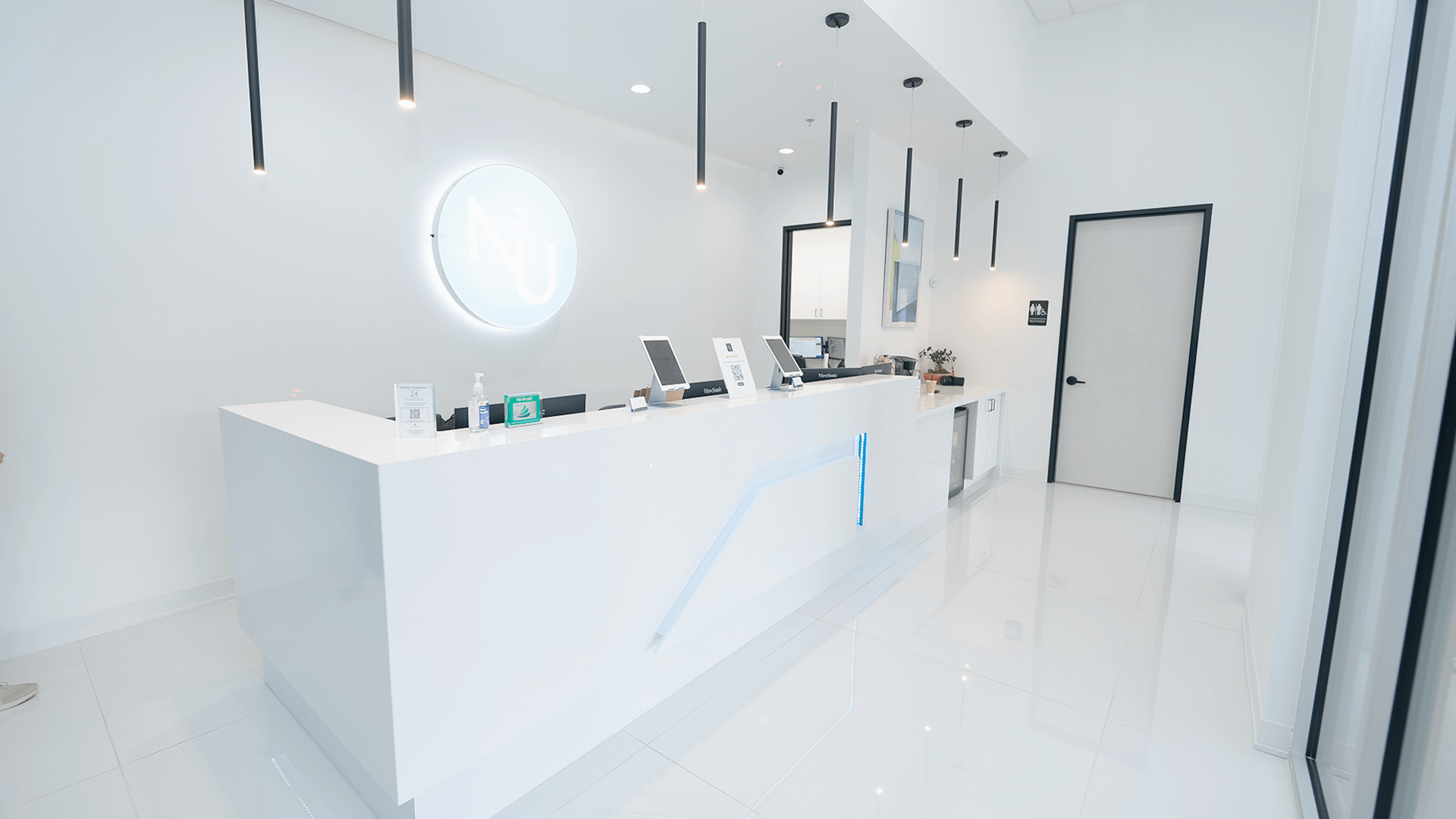
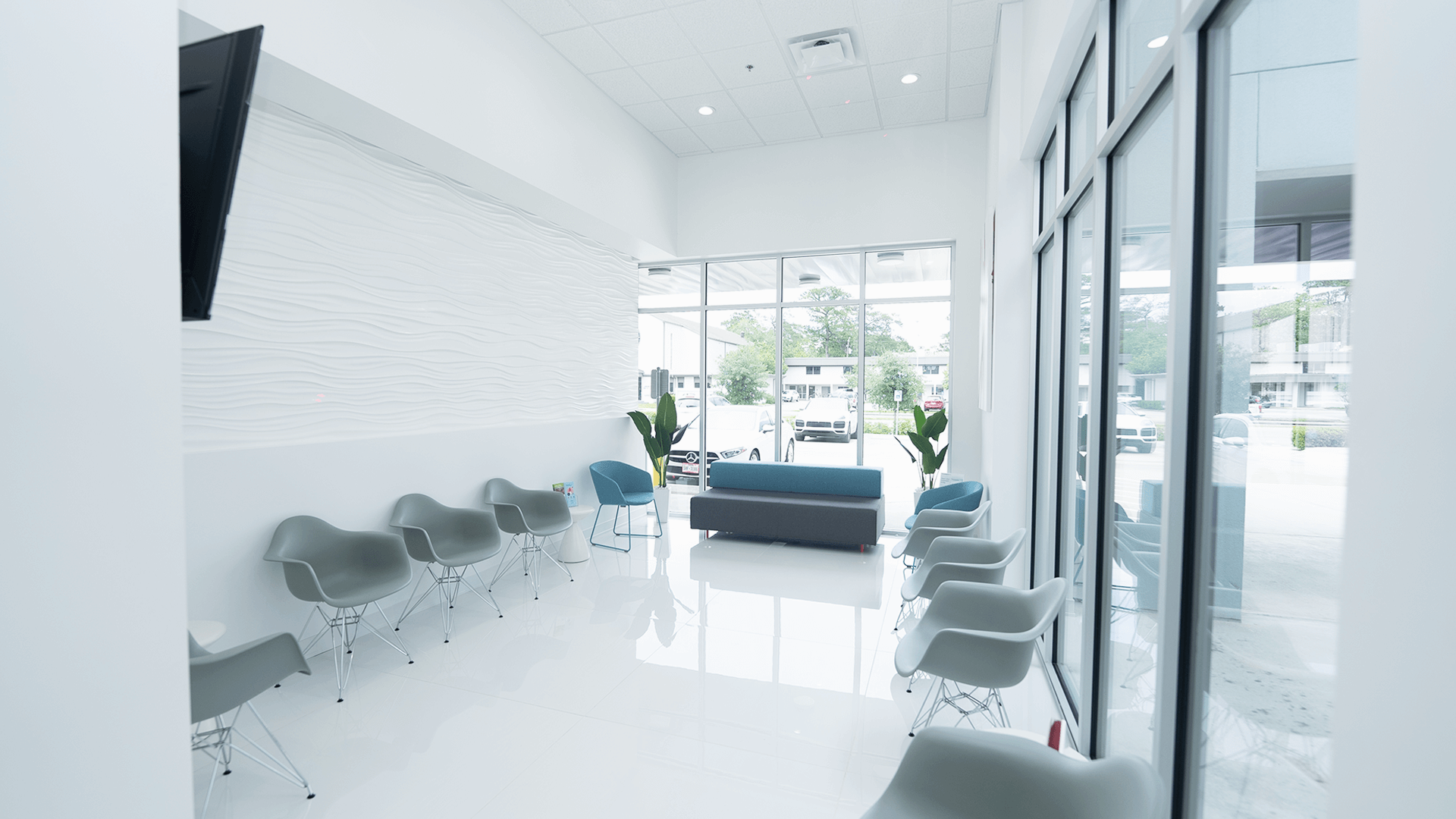
See what a visit to our modern, state-of-the-art dentist office is like!







Monday 9am - 6pm
Wednesday 9am - 6pm
Friday 9am - 6pm
Saturday 9am - 3pm
Check out what our patients are saying in Cypress, TX


“The Best Dentist In Cypress, Texas”
We have been looking for a family dentist for a long time, we have tried a bunch of places but nothing felt quite like home. Not too long ago we stumbled upon Nu Dentistry and met Dr. Ali. Not only was he professional, kind, and gentle, but he always finds a way to fit us in when we need an appointment. He’s also pretty funny! I appreciate that he takes the time to explain what he’s doing, before he does it. That really puts me at ease.

“Never Thought I'd Say It”
I never thought I’d say it, but going to the dentist is actually fun now. I recently came in for a root canal, and I got to sit back and catch up on Stranger Things without any pain!

“Anxiety Has Kept Me Away ”
I usually have such huge anxiety when I go to a dentist appointment, which means I always put off visits until the last minute to disastrous consequences. However, Dr. Loggins helped me with sedation, so the entire process was a breeze!
“The Best Dentist In Cypress, Texas”
We have been looking for a family dentist for a long time, we have tried a bunch of places but nothing felt quite like home. Not too long ago we stumbled upon Nu Dentistry and met Dr. Ali. Not only was he professional, kind, and gentle, but he always finds a way to fit us in when we need an appointment. He’s also pretty funny! I appreciate that he takes the time to explain what he’s doing, before he does it. That really puts me at ease.
“Never Thought I'd Say It”
I never thought I’d say it, but going to the dentist is actually fun now. I recently came in for a root canal, and I got to sit back and catch up on Stranger Things without any pain!
We are proud members of these dental organizations and accreditations


We are dedicated to providing you with only the best quality dental care


