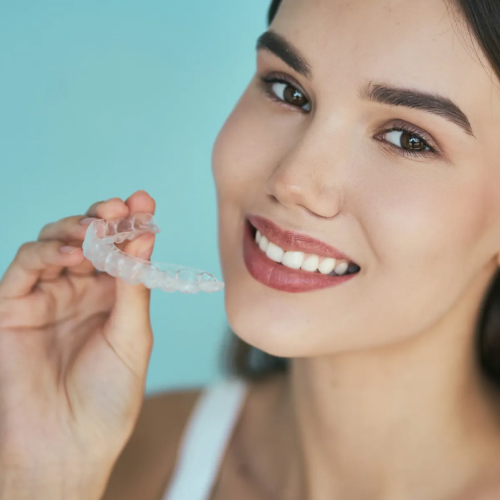
Invisalign vs. At-Home Aligners: What Cypress Patients Should Know Before Choosing
Comparing Invisalign vs. at-home aligners? Discover which clear aligner is best for your smile. Contact Nu Dentistry Cypress to schedule your consultation!
Read More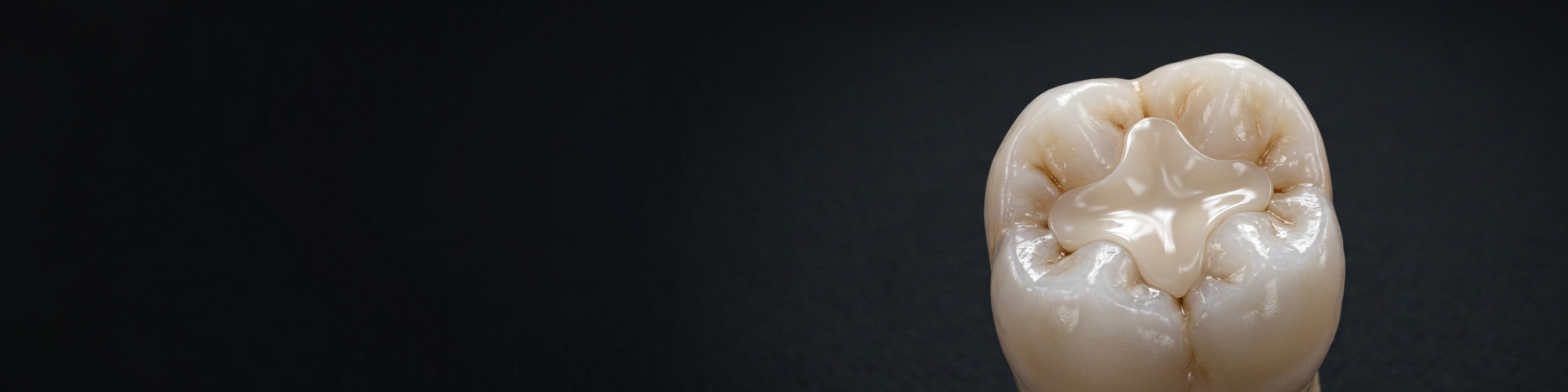
Reviewed by Dr. Ali Tameemi, DDS
Not every cavity qualifies for a simple filling. The depth of decay, the structural integrity of what's left, and — critically — the type of pain you're experiencing all determine whether a filling will hold or whether you need something more. Here is how dentists think through those decisions clinically.
Before treatment options are discussed with a patient who has deep decay, careful listening to how they describe their pain is one of the most important diagnostic steps available. For Cypress-area patients, this diagnostic step is one of the most underused tools in patient education, and understanding it can help predict your own outcome before a clinical exam.
There are two distinct pain profiles that matter here.
Reversible pulpitis presents as a sharp, quick jolt — usually triggered by cold, sweet foods, or air. The key feature: the pain stops almost immediately when the trigger is removed. This indicates the nerve is irritated but still healthy. In most of these cases, a cavity filling can resolve the problem entirely.
Irreversible pulpitis is a different story. The pain lingers for 30 seconds or more after the trigger is gone, or it throbs spontaneously — especially at night when lying down. Sometimes patients describe it as a dull, constant ache that no over-the-counter medication fully touches. This pattern strongly suggests the pulp tissue is dying or already infected. A filling placed over that nerve will almost certainly fail, because the biological problem has already passed the point where a restoration can help.
According to the Mayo Clinic, tooth decay that advances past the enamel into the dentin and pulp requires progressively more involved treatment — from fillings to root canals depending on severity. The pain profile serves as the clinical compass for knowing where on that spectrum a patient falls.
If you're experiencing spontaneous, lingering pain, coming in soon is important. That window for saving a tooth with conservative treatment closes quickly.
Most people assume "deep" only means "close to the nerve." That's part of it. But there's a second dimension to depth that's just as important: how much healthy tooth structure remains after the decay is removed.
A common structural guideline used in practice is this: if the width of a cavity exceeds roughly half the distance between the tooth's cusps, the remaining walls become dangerously thin. A composite or amalgam filling in that situation doesn't reinforce the tooth — it acts more like a wedge. Biting forces concentrate at those thin walls, and over time, a cusp fractures. When that happens, what started as a filling case can become a tooth crown case, or worse, an extraction case.
This is why a crown is sometimes recommended for a cavity that isn't particularly close to the nerve. It's not about how deep the decay goes vertically — it's about how much structural integrity remains. A crown provides what clinicians call the "ferrule effect": a 360-degree collar of material that braces the tooth against lateral and vertical forces. A filling, no matter how well placed, cannot replicate that.
Cleveland Clinic explains that when a cavity is too large for a filling but doesn't yet warrant a full crown, inlays and onlays — indirect restorations made in a lab — can serve as the structural middle ground. These fit into the tooth like a puzzle piece and are bonded permanently in place.
The takeaway: ask your dentist not just "how deep is it?" but "how much tooth is left?"
There's a scenario that rarely gets explained to patients — the "borderline" case where decay is close to the nerve but hasn't definitively reached the pulp. This is where a specific technique called indirect pulp capping (IPC) comes in.
During IPC, instead of removing every last trace of soft decay (which would expose the nerve), a thin layer of affected dentin is intentionally left over the pulp and covered with a therapeutic liner. Materials like Mineral Trioxide Aggregate (MTA) or calcium hydroxide create a biological seal that encourages the remaining dentin to remineralize and the pulp to form a protective barrier. The tooth is then restored with a filling or crown on top.
Research published in PMC notes that while the evidence on specific liner materials continues to evolve, the principle of vital pulp therapy — preserving pulp health rather than defaulting to root canal — is well-supported for managing deep carious lesions in permanent teeth.
This approach matters because it keeps a living tooth alive. A tooth with an intact pulp is stronger, more responsive to problems, and longer-lasting than one that has undergone root canal treatment. If you're told your cavity is "borderline," it's worth asking specifically: Am I a candidate for indirect pulp capping with a medicated liner?
Not every deep cavity needs a root canal. But not every deep cavity can be saved with a standard filling either. IPC sits in that clinically important space between them.
When decay reaches the pulp — confirmed by irreversible pulpitis symptoms, X-ray findings, or direct exposure during treatment — a filling is no longer an option. At that point the choices narrow to endodontic root canal therapy or extraction.
The strong clinical preference, whenever possible, is to save the natural tooth. The American Association of Endodontists is clear on this: nothing artificial replicates the feel, function, and longevity of your natural tooth. Root canal-treated teeth, when properly restored with a crown afterward, can last a lifetime.
Tooth extraction becomes the right answer only when the tooth is structurally unrestorable — when decay has destroyed so much structure that even a crown can't create a stable foundation, or when there's significant bone loss. In those cases, dental implants or bridges are discussed as replacement options.
WebMD's overview of dental fillings reinforces that filling material selection — composite resin, amalgam, gold, porcelain — also depends on the location and extent of decay, not just patient preference. For deep posterior teeth under heavy chewing load, material strength matters as much as aesthetics.
The decision tree clinicians work through for every deep cavity patient:
Each step depends on clinical findings — not a blanket policy.
If you've been told you have a deep cavity and you're not sure what comes next, the most valuable thing you can do is get a thorough clinical assessment — one that looks at both the biological and structural picture.
At Nu Dentistry Cypress, high-resolution digital X-rays and private consultation suites are used to walk through every finding with patients in Cypress, Texas. You deserve to understand your options — including the ones most dentists don't take time to explain. Schedule a cleaning and exam today to get a comprehensive look at your dental health.
This article is for informational purposes only and does not constitute dental or medical advice. Individual clinical situations vary. Please consult a licensed dental professional for diagnosis and personalized treatment recommendations.
Fresh news from the dental world

See what a visit to our modern, state-of-the-art dentist office is like!










Monday 9am - 6pm
Wednesday 9am - 6pm
Friday 9am - 6pm
Saturday 9am - 3pm
Check out what our patients are saying in Cypress, TX


“The Best Dentist In Cypress, Texas”
We have been looking for a family dentist for a long time, we have tried a bunch of places but nothing felt quite like home. Not too long ago we stumbled upon Nu Dentistry and met Dr. Ali. Not only was he professional, kind, and gentle, but he always finds a way to fit us in when we need an appointment. He’s also pretty funny! I appreciate that he takes the time to explain what he’s doing, before he does it. That really puts me at ease.

“Never Thought I'd Say It”
I never thought I’d say it, but going to the dentist is actually fun now. I recently came in for a root canal, and I got to sit back and catch up on Stranger Things without any pain!

“Anxiety Has Kept Me Away ”
I usually have such huge anxiety when I go to a dentist appointment, which means I always put off visits until the last minute to disastrous consequences. However, Dr. Loggins helped me with sedation, so the entire process was a breeze!
“The Best Dentist In Cypress, Texas”
We have been looking for a family dentist for a long time, we have tried a bunch of places but nothing felt quite like home. Not too long ago we stumbled upon Nu Dentistry and met Dr. Ali. Not only was he professional, kind, and gentle, but he always finds a way to fit us in when we need an appointment. He’s also pretty funny! I appreciate that he takes the time to explain what he’s doing, before he does it. That really puts me at ease.
“Never Thought I'd Say It”
I never thought I’d say it, but going to the dentist is actually fun now. I recently came in for a root canal, and I got to sit back and catch up on Stranger Things without any pain!
We are proud members of these dental organizations and accreditations


We are dedicated to providing you with only the best quality dental care


